
Potential applications
For drug developers
Targeting the immune cells, tumor cells or even both, our technology is particularly well suited for immuno-oncology applications.
For example, our most advanced Proof-of-Concept led in collaboration with CNRS, Gustave Roussy Institute and Dijon Hospital (CGFL), illustrate a gain in immunization efficacy by targeting cDC1 and by delivering tumor antigens. Compared to conventional methods, this targeted approach is designed to activate robustely the immune system specifically against tumor cells, enabling their selective destruction.
An effective immunization platform is especially valuable for therapeutic cancer vaccines, aimed at eliminating residual cancer cells and reducing the risk of relapse. In many cancer indications, these residual cancer cells are poorly vascularized, making current immunotherapies and chemotherapies (iv injections) less effective. The consequence is often a cancer relapse that leads to another line of chemotherapy, then the death.
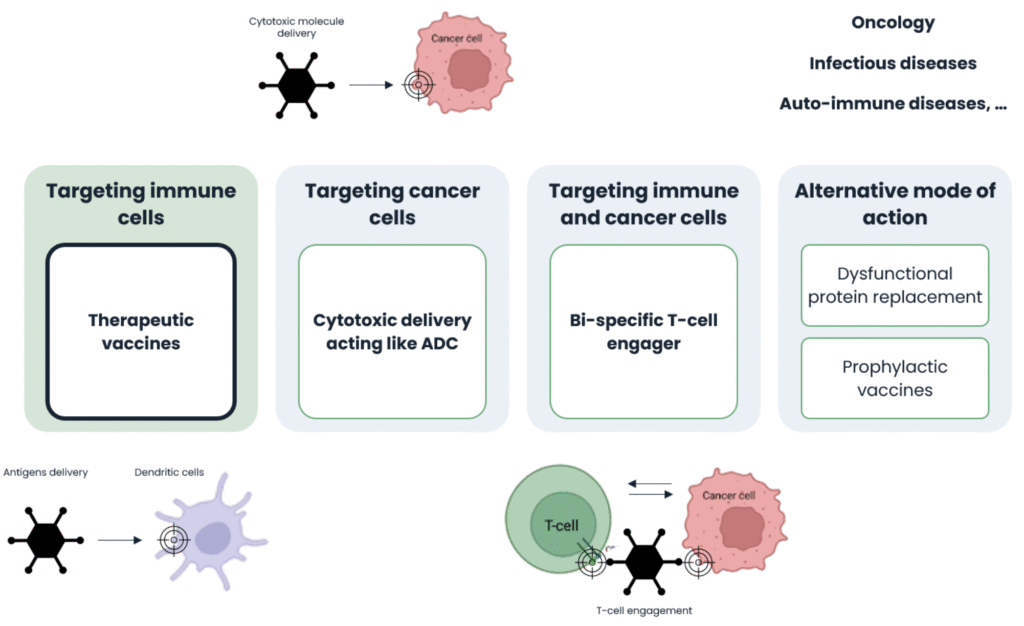
Through R&D collaborations, our team aims to expand proof-of-concept data across a range of new applications.
We are particularly interested in demonstrating the suitability of our platform for:
- Targeted cytotoxicity
- Targeted anti-cancer immunization
- Targeted immuno-stimulation
- T-cell engagement (our VLPs can be multi-specific)
- RNA targeted delivery for in vivo CAR-T strategies
We are open to co-finance feasibility studies. Shared results help showcase the strengths of our technology across diverse use cases.
If you have a project in mind, don’t hesitate to reach out via the contact form, we’d be happy to explore opportunities together.
For test developers
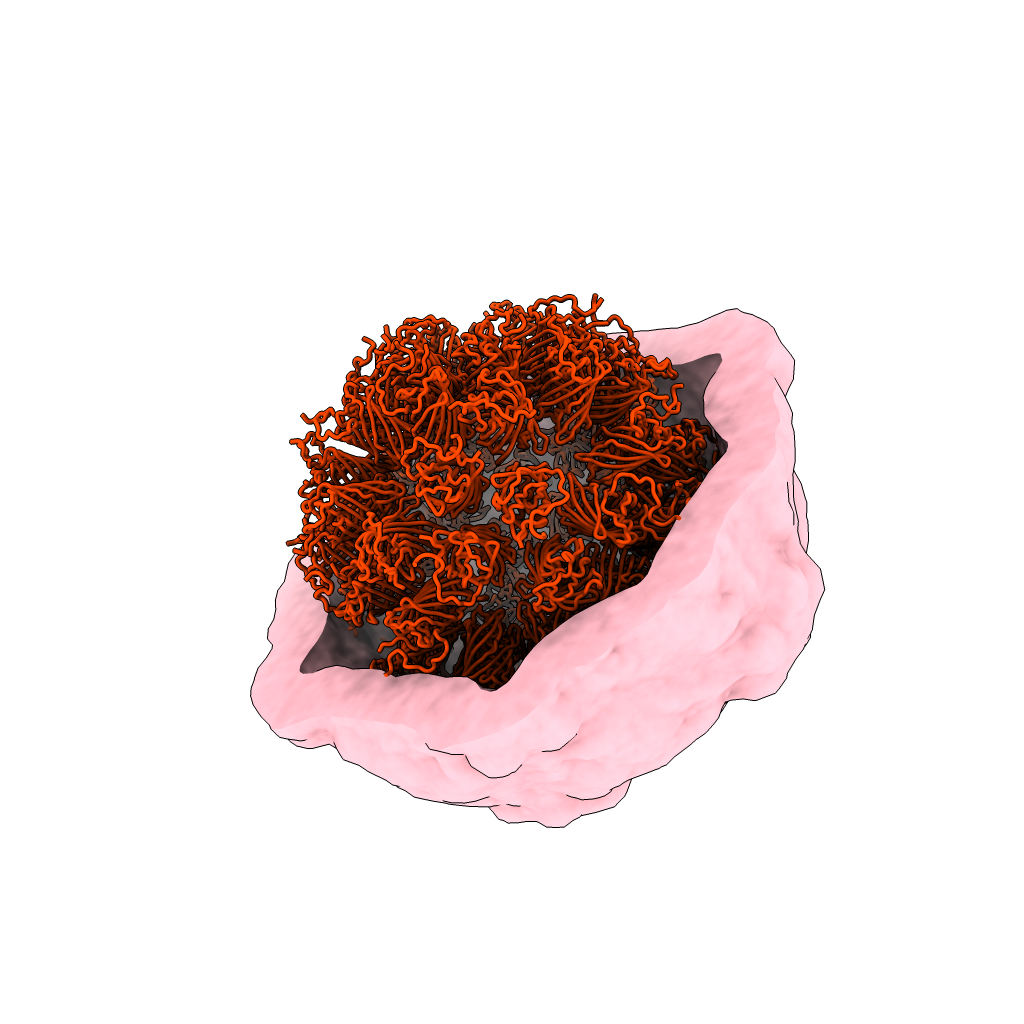
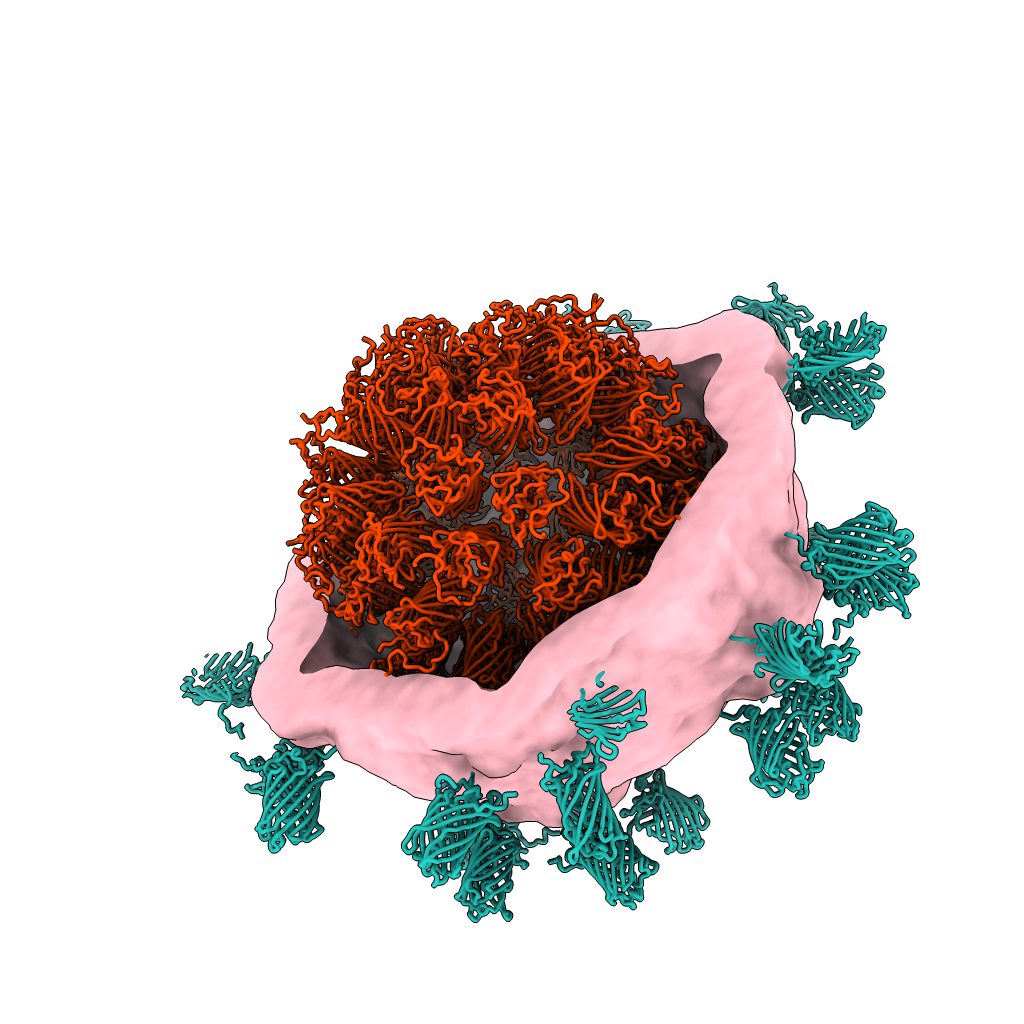
Depending on the need, antibody fragments or other proteins can be displayed on the surface. Antibodies that recognize the surface of VLPs are also available for particle capture purposes.
-
VLPs loaded with fluorescent proteins (tRFP or GFP)
-
VLPs loaded with bioluminescent enzymes that activate in the presence of their substrates (luciferase or nano-luciferase)