RNA platform · phytoVLP

Delivering RNA where it matters.

We unlock the full potential of RNA therapeutics through an integrated platform for production and targeted delivery — precise, extra-hepatic and re-dosable.

Reprogrammed plant capsid
Scroll
Our purpose

One conviction,
one trajectory.

Messenger RNA is one of the most promising technologies in modern medicine. It can produce therapeutic molecules or directly reprogram cells within patients' bodies, overcoming the main manufacturing, cost and toxicity constraints of conventional cell and protein therapies.

01

The why

Unlock the full potential of new RNA-based therapies.

02

The how

Through plant biotechnologies, we design and produce RNA-based therapeutic assets, enabling better delivery efficacy and scalable industrialization.

03

The what

Programmable, non-viral next-generation RNA vectors: more precise, with no hepatic accumulation, and re-dosable.

Purpose

Enable pharmaceutical companies to harness the therapeutic potential of RNA, to ease its industrialization and regulatory adoption and, above all, to make it accessible to as many patients as possible.

Vision

Become the world-reference platform for the production and targeted delivery of RNA therapies beyond the liver.

The market challenge

RNA hits
a wall:
the liver.

Cell therapies such as CAR-T, for example, deliver remarkable clinical efficacy but remain complex and costly to produce, especially for individualized therapies. mRNA offers an alternative — producing directly in vivo the targeted proteins and cellular functions, for a large patient population.

But current platforms, based on lipid nanoparticles (LNP), face major pharmacological limitations that impair RNA delivery efficacy.

  • Systemic inflammation which limits repeat dosing
  • Immunogenicity and pre-existing antibodies in part of the population
  • RNA cell internalization complexity: 1–4% of RNA endosomal escape
  • Targeting function achieved through complex formulation, not generalizable from one RNA to another
  • Complex production and short shelf life at 5 °C
  • Stacked licenses to access the latest RNA and lipid innovations

Faced with the limitations of LNPs, the pharmaceutical industry is often forced to increase administered doses to reach satisfactory efficacy. This strategy frequently results in a poor therapeutic benefit and a heightened risk of toxicity, particularly for the liver.

LNP · Lipid nanoparticle
75–95%
of LNPs accumulate in the liver.
Target tissuesLiver
OncologyImmunotherapyRare diseasesAutoimmuneRegenerative medicine
The technology

One platform. Two challenges.
Production and Precision RNA delivery.

Through a co-development and licensing partnership model, Serendip offers an integrated platform for producing vectorized RNA. It brings together two innovative technological building blocks: a unique, patented non-viral vector, and a process to co-produce the RNA with this reprogrammed vector.

ÉTAPE 01

Design of targeted RNA-VLPs

The capsid is engineered to fit the partner's RNA and the desired mechanism of action.

ÉTAPE 02

Production of targeted RNA-VLPs

The RNA is produced simultaneously with the targeted VLP, with no separate manufacturing or formulation step. A simple process, generalizable to any RNA and any targeting.

ÉTAPE 03

Quality control

The capsid offers natural stability, homogeneous size and a uniform structure.

ÉTAPE 04 · partenaire

Application

The partner receives a best-in-class therapeutic asset, of high quality and in accordance with regulatory requirements.

×60 capsid proteinsunique pharmacological properties phytoVLPcapsid of a plant virus, non-infectious
A unique value proposition by Serendip

A phytoVLP,
modular and safe.

Our vector is a phytovirus-like particle (phytoVLP): a virus-like particle derived from the capsid of a plant virus, genetically reprogrammed. Non-infectious, naturally stable and modular, it protects its payload inside and displays targeting molecules on its surface.

No pre-existing immunity

No pre-existing antibodies observed in healthy human subjects, unlike viral vectors, LNPs and other VLPs commonly used for their immunogenic power in preventive vaccination.

Extra-hepatic tropism

The technology naturally limits hepatic accumulation, for a biodistribution favorable to targeted tissues.

Repeat dosing

Its low immunogenicity opens the way to multiple administrations — essential for chronic indications.

Surface programming

Through genetic fusion or coupling chemistry, the capsid is tailored to display specific ligands and precisely target cells and tissues.

Plant-produced

Plants act as a natural bioreactor, free of human pathogens — fast, safe and cost-effective production.

Two bottlenecks,
one platform.

Serendip sits at the intersection of industrial mRNA production and targeted extra-hepatic delivery.

Competitive advantage

Conventional LNPs vs phytoVLP Serendip.

CriterionConventional LNPsphytoVLP Serendip
Extra-hepatic targetingLowHigh
Repeat dosingLimitedYes
Pre-existing immunityPresentNone / negligible
Targeting programmabilityComplexVery simple
Co-production with the RNANoYes
Industrial complexityHighLow

Mastering targeted delivery and industrializable production means capturing a major share of the next-generation therapeutics market.

Applications

The most strategic
market of the decade.

Our first use case: enabling our partners to produce therapeutic cells directly in vivo, overcoming lengthy, costly ex vivo processes and patient-by-patient treatments.

Initial market · the most strategic

In vivo cell therapies

Reprogram and arm immune cells within the body itself, to re-arm them against tumors — with no patient sampling, no ex vivo modification or expansion, no individualized manufacturing, with an off-the-shelf drug and minimal logistics.

CAR-T in vivo

Equip T lymphocytes with a chimeric antigen receptor (CAR) directly in vivo, recognizing tumor antigens on the surface of cancer cells and enabling tumor destruction. The approach also applies to destroying the B cells responsible for certain autoimmune diseases.

OncologyAutoimmune diseases

CAR-NK in vivo

The same strategy applies to other immune cell types, such as NK (Natural Killer) cells.

Immunotherapy

CAR-Treg in vivo

The same strategy applies to regulatory T cells (Tregs) to fight inflammatory diseases.

Inflammatory diseases
Secondary market

Advanced cell therapies

Gene therapiesRegenerative medicineCellular immunotherapies
Tertiary market

Protein therapies

CytokinesAntibodiesEnzymesRecombinant proteins
Intellectual property

A two-pillar protection.

Pilier 01

Trade secret

The design, screening-engineering and manufacturing processes for the RNA-VLP candidates are protected by undisclosed proprietary know-how — limiting any reproduction of Serendip's art.

Pilier 02

Three platform patents

Three platform patents, two of them proprietary (2026), restrict access to the technology and control license granting — exclusivity, indication, therapeutic target, etc. They mainly cover:

  • The particle architecture
  • All surface modifications
  • All future improvements to the technology
  • The associated therapeutic applications

One strategic partner, one platform, one license.

The team · Serendip today

Born from serendipity,
where the unexpected becomes innovation.

Founded in 2023 in Strasbourg, Serendip was born from the encounter between academic researchers — experts in plant biology and virology — and a specialist in the industrialization of bioprocesses. The company transformed the grapevine fanleaf virus (GFLV) into a modular therapeutic vector.

Now based in a 440 m² R&D laboratory in Illkirch, near Strasbourg, and a winner of the i-Lab 2025 competition, the team is deeply embedded in the French and European biotech ecosystem.

The virus's intrinsic properties are preserved within the VLP, giving it several key advantages:

  • 11.5 kb of encapsulatable RNA — a naturally high encapsulation capacity.
  • High thermal stability — the virus persists in soils and infects grapevines for 7 years, between 5 and 25 °C.
  • Strictly plant-based — it does not infect humans, greatly limiting the risk of pre-existing immunity against its capsid.
  • Defined icosahedral structure — ~30 nm in diameter, for high homogeneity and predictable production.
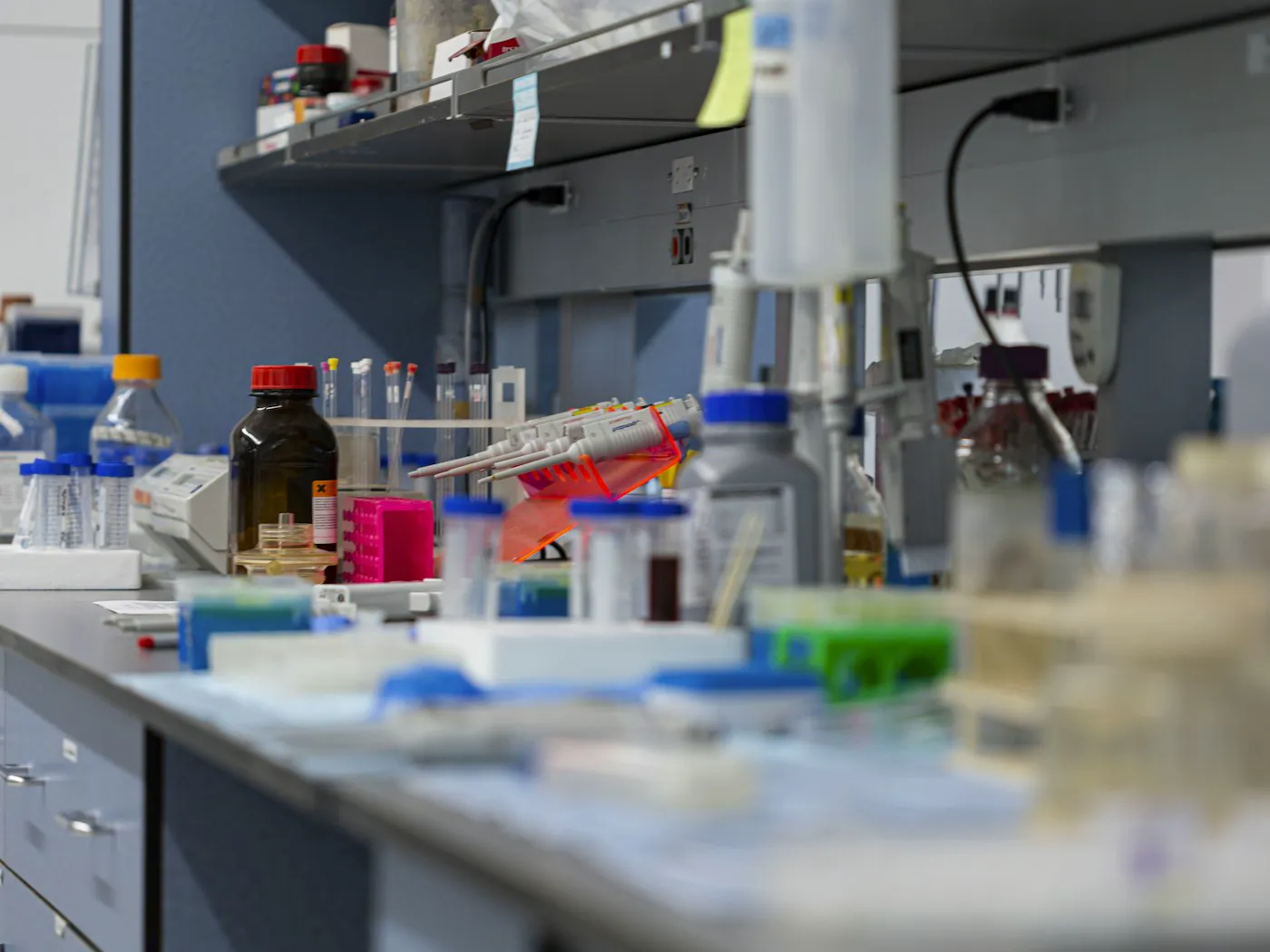
Intérieur d'un laboratoire de recherche
R&D laboratory · Illkirch (Strasbourg)

Alexandre Hill

CEO · Co-founder

Drives the company's strategy, development and structuring.

LinkedIn

Vianney Poignavent

CSO · Co-founder

Behind the original discovery (ex-IBMP/CNRS) — vector characterization and engineering.

LinkedIn

Adrien Trolet

CTO · Co-founder

Plant-based production processes and industrialization of the platform.

LinkedIn
2023
founded in Strasbourg
0
team members
440
R&D lab in Illkirch
i-Lab
2025 competition winner
Advisory board

A multidisciplinary board
of the highest caliber.

Far beyond science: our board brings together scientific excellence, industrial experience and entrepreneurial vision — with expertise across business, marketing, entrepreneurship, clinical, pharmacology, quality and regulatory affairs, in service of in vivo therapies.

Jean-Pierre Abastado
R&D

Jean-Pierre Abastado

Former R&D Director, Servier

Yann Godfrin
Entrepreneurship

Yann Godfrin

Former CEO Erytech · CEO Axoltis

Nicolas Collet
Strategy

Nicolas Collet

Strategy consultant, AEC Partners

Marina Iché
Business

Marina Iché

Former CEO, Ilife Consulting

Pierre Labout
Marketing

Pierre Labout

CEO, Bloom

Laurent De Crasto
Entrepreneurship

Laurent De Crasto

CEO, ImmunRise

Virginie Kribs
Advisory

Virginie Kribs

CEO, Kribs Conseil

François Ghiringhelli
Clinical

François Ghiringhelli

Oncologist, CGFL

Sébastien Apcher
Science

Sébastien Apcher

Research Director, Gustave Roussy

Hélène Dumortier
Immunology

Hélène Dumortier

Research Director, IBMC

Julien Beyrath
Pharmacologie

Julien Beyrath

Pharmacology/tox consultant, Curare

Vincent Dubois
Regulatory

Vincent Dubois

Regulatory consultant, L2D

Jeremy Amzallag
Quality

Jeremy Amzallag

Quality consultant, Eylio

Florent Maestracci
CMC

Florent Maestracci

CMC consultant, Alter Ego

Pascal Neuville
Entrepreneurship

Pascal Neuville

Former CEO, Domain Therapeutics

Ecosystem

At the heart of France's leading biotech ecosystem.

Serendip Innovations is supported and guided by the research institutions, public funders and health clusters that structure therapeutic innovation in France.

France Biovalley
Région Grand Est
Bpifrance
La French Tech Seed
CNRS
RISE — CNRS Innovation
Institut du Médicament de Strasbourg
MabDesign
MATWIN
Paris Saclay Cancer Cluster
Gustave Roussy Cancer Campus
Quest for Health
Contact

Let's build the next generation of RNA therapies.

Manufacturers, academic partners, investors: let's discuss how the Serendip platform can accelerate your programs.